
Bitten Apples
Reading Log | Spring 2025

Notes, by Daisy Alioto and Josh Zoerner. Alioto is the co-founder of Dirt Media, a wildly contemporary web site / newsletter / blog / online journal / floor polish / dessert topping / whatever, to which I have subscribed for some time, and which reliably provides this aging reader with a frisson of with-it-ness — a form of cultural anthropology, if you will. In Notes, Alioto and her publisher have collected an anonymous sampling of the random jottings that her correspondents have culled from the ubiquitous app. The pages of the text are cunningly designed to mimic Apple’s Notes app; the entries are predictably fragmentary, sometimes smart, and often quite funny. The idea is a little thin conceptually, but taken as a whole the book is an engaging slice of the zeitgeist: one for the time capsule, perhaps. The contributors are listed at the back of the book, and include three (3) former Majuscule writers.
Critical Theory: A Very Short Introduction, by Stephen Eric Bronner. I have always been a fan of this Oxford series, whose installments now number in the hundreds, not least because if you have an NYPL library card you can read them online for free. So instead of reading 400 pages of Horkheimer or whatever and not understanding it, I can read 100 pages of this and not understand it. Kidding! I kind of understand it.
Authority: Essays, by Andrea Long Chu. An odds-and-sods omnibus from one of the three or four greatest working American critics, Authority produced in me complex and occasionally tendentious reactions. As a longtime subscriber to n+1 and Bookforum, I had read quite a few of these pieces before, of course; the others were originally published in New York magazine. I don’t read New York magazine — I am not sure I have ever met anyone who reads New York magazine — but here these pieces carry the faint, melancholy aroma of pathos that clings to reviews of books and television shows from 2019. (At one point, Chu says scornfully that “scandals in the art world brown like bitten apples; to discuss them now, as relevant as they may be to the point at hand, feels like unsolicited rehashing.” I am tempted to wonder if she had ever considered “unsolicited rehashing” as an alternate title for her book). That I have by now been thoroughly trained to dutifully pretend, at least when in public, that TV shows are legitimate objects of critical study does not mean that I ever watch TV. I’m just not interested. What remains, then?
Well, “On Liking Women,” the 2018 n+1 essay that made her name, for one, and that remains a stone classic. An introduction that serves as a surprisingly thoughtful potted history of the theory of criticism; a sharp and elegant anatomization of certain strains of contemporary feminism; a pair of beautifully modulated personal essays. Most trenchantly: a dozen or more passages of piercingly eloquent and original analysis, the kind that stops your brain in its tracks. Some less attractive qualities emerge; the TLS reviewer spoke of her “tone of superiority,” which surfaces most gratingly in an essay about Ottessa Moshfegh, where she makes reference to “the imaginary debate over ‘unlikable’ female characters that has dribbled like a nosebleed down the internet’s face since 2013.” I dislike this kind of reflexive snobbery. The ethical and aesthetic valences of openly immoral characters is a central problem of literary theory, and its intersection with feminist identity is a legitimate area of discourse and debate. In another essay she refers to Tao Lin as “something of a darling in the Alt Lit scene,” rather than what he is: the only authentically original stylist to emerge in American fiction in the past twenty years.
The Awl | The Book: An Anthology of Writing from the Internet’s Best Publication (2009–2018), edited by Carrie Frye. Speaking of “unsolicited rehashing,” the whiff of irrelevance that emanates from Chu’s New York magazine reviews turns into an overpowering, not completely unpleasant aroma in this puzzling historiographical exercise. A sturdy paper-on-board hardcover from something called Brick House, it is difficult to imagine or understand who could be the reader for this. The essays are often funny and smart, but they are all painfully dated. To read them is to step into the crosscurrents (BuzzFeed envy! Unironic Negronis! chopped salads!) of a time that now seems a distant as the Trojan War.
Hello Chaos, A Love Story: The Disorder of Seeing and Being Seen, by Charlie Engman. A phenomenal piece of writing, and utterly sui generis. Hello Chaos is a small, photo-cluttered grenade of a book that tells the story of Hello Kitty — the cutesy visual icon — and her quest for finding meaning via a relationship with her counterpart and dark double, Mickey Mouse. Just typing this makes it sound silly, but the writer has created something astonishing here; a high-speed postmodernist jumble of profound epistemological questions, spewed out onto the page in a blur of pink type and clumsily, frantically collaged images of Kitty and Mickey morphing like memes into almost unrecognizable configurations. Hello Chaos is apparently number six in a series of publications from something called SPBH Essays, which “aims to inject provocative new ideas into contemporary cultural debate.” Mission accomplished.
Uneasy Listening: Notes on Hearing and Being Heard, by Anouchka Grose and Robert Brewer Young. An entrancing little book co-authored by a psychoanalyst and a violin-maker, Uneasy Listening is a spry and smart investigation of the various dynamics that are engaged by the process of listening, from the semiotic to the musical. Grose is much the more voluble half of the team, with Young contributing laconic statements in a gnomic register; amusingly, Grose becomes exasperated with her counterpart, and the book concludes with a “conversation” between the two. Pretty funny. Like the SBPH books by Engman (above) and Taylor (below), this is part of a series published by the mysterious continental outfit Mack Books. I like this model, such as it might be; slim paperbacks of incisive but accessible cultural critique feel like a necessary corrective to the endless churning mulch of contemporary literary fiction.
Selected Essays from the Rambler, Adventurer, and Idler, by Samuel Johnson, edited by W. J. Bate. I feel like I have been warily circling Johnson for about half of my life. His influence, of course, is so broad as to seep into almost any cranny of post-17th-century literary criticism; I revere the famous Lives of the Poets essays on Browne, Shakespeare, and Swift without quite completely agreeing with any of them. These essays, which comprise the arching middle portion of the great man’s career, are abundantly interesting, even profound — my reading quickly generated a forest of dog-eared pages, each copiously underlined and annotated. They are characterized by a very English kind of bluff common sense, punctuated by occasional surprising flashes of hard-won compassion; to my mind they have the highly specific poignance of a man dedicated to the classical values of reason and clarity who is secretly battling a dark undertow of madness and chaos. Much to revisit, absorb, and mull.
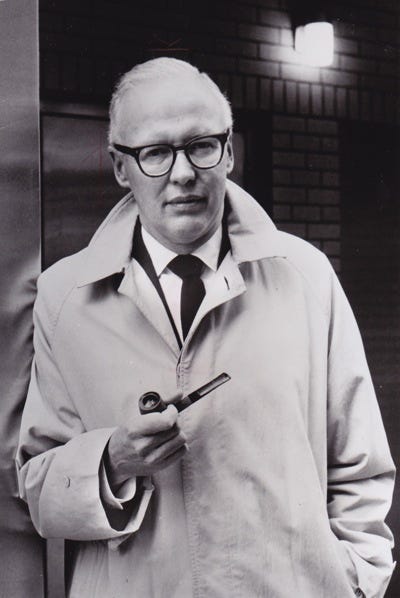
The End of the Night, by John D. MacDonald. This overstimulated noir tells the squalid tale of four random pyschopaths who are thrown together in a Texas roadhouse and embark on a bloody, drug-fuelled cross-country killing spree; pretty strong sauce for 1960. The narrative is cunningly constructed from cross-cutting perspectives and timelines, giving it a whirling, disorienting quality. Unfortunately the effect is torpedoed by acres of ham-handed philosophizing of the brooding Norman Mailer school of macho bullshit that pollutes so much midcentury crime fiction (cf. David Goodis).
Image Text Music, by Catherine Taylor. This little volume is number 3 in the SPBH Essays series, as Charlie Engman, above. This installment is a free-wheeling response to Roland Barthes’s book of the near-identical title. While not quite as mesmerizing as Hello Chaos, this offering is also spiky and charming, as the writer imagines herself locked in a personal and intellectual pas de deux with her idol and inspiration.
St. Elmo’s Fire (1985), directed by Joel Schumacher. Laid up and in need of distraction, I watched this on a whim late one sleepless night. It is a deeply terrible movie. The plot is grotesquely illogical, and every single character at some point during the film casually does something so heinous, so violent and sick, that your jaw drops. It has absolutely no filmic style whatever, and the music is atrocious. Given this, it is upsetting that I found watching this movie, in some dark and unhappy way, to be a moving experience. In trying to understand this, I feel the aesthetic and philosophical questions that underpin my sense of cultural value multiplying and deliquescing, with incredible velocity, into a confused and confusing blur. I could write a dissertation on this. (It is also possible I have had too much coffee.)
Part of this disconcerting reaction, I think, is that the seven famous young actors in this film, in the first blush of their early stardom, remain magnetic; Ally Sheedy and Andrew McCarthy are particularly fine. The factor that weighs more heavily on me, however, is a potent and untrustworthy nostalgia. I graduated high school in 1986, and I went to a preppy private college in the northeast, and the movie is saturated, from the knit ties and three-button blazers to the feathery hairstyles to the dorm-y first apartments and rowdy collegiate bars, with the grain and hide of that particular era, and thus of my own young adulthood, which, like that of the characters in the movie — like those of many young Americans of my generational cohort, I suppose — was a wild and desperate blur.
And this last valence is both the most poignant and the most upsetting, because the movie reinforces in me a deeply held and not very ennobling private belief that this era, now four decades gone, was in some indefinable way, better: crazier and harder but somehow sweeter through the chaos. It’s not just the cocaine, and the constant smoking and drinking (at one point Demi Moore’s character pours herself a drink that appears to be about eight ounces of straight vodka in a rocks glass, with no ice), or even all the fucking and lying and brawling, but the sense of how young everyone was, unprepared for adult life but somehow also jaunty, even rakish, in shared insouciance. And this is what troubles me: How is it possible that this cheesy, claptrap, dog-shit movie, this farrago of lazy cliches, can stir such a complex emotional response? Is nostalgia ever legitimate?