
Bound for Glory
Reading Log | Fall 2025

The Paradoxes of Robert Ryman, by Jean Frémon, translated by Brian Evenson. Superior art criticism from this erudite French critic, who analyzes the work of the great American minimalist painter via a series of linked meditations that yet have the flow and precision of great fiction. Aside from the color reproduction on the cover, the book contains no illustrations — an example of my belief that great art writing need not be accompanied by color plates.
The Crisis of Narration, by Byung-Chul Han, translated from the German by Daniel Steuer. Concise, pellucid literary theory from this reclusive Korean-born polymath, who is something of a cult figure in certain intellectual circles. Han’s central thesis is that narration, which is central to literature and indeed humanity, is under attack from a deluge of information, “a new form of domination” that does not “operate through imperative or prohibitions.” The book is strongly rooted in the thinking of Walter Benjamin, but has an open, accessible style — not generally a typical characteristic of German theory. I detect a slight (linguistic?) confusion between the words “narrative” and “storytelling,” which seem to mean slightly different things to the writer over the course of the book. I also wonder if there could not be forms of literature or art (lyric poetry? sculpture? Sir Thomas?) or indeed human experience that do not conform to the imperatives of narration.
Flat Earth, by Anika Jade Levy. An amusing exercise in millennial anomie of the affectless-narrator genre, this novella about an aimless failed artist and her friendship with a budding art-world superstar has a sheen of nihilist glamour combined with a quick, spiky wit and a frisson of apocalyptic cli-fi-ish doom; the eschaton takes many forms.
Jonathan Edwards, by Perry Miller. A transformative, life-altering book; a masterpiece; an analysis of ideas and history of the very highest order. First published in 1949, Miller’s book provides unparalleled insight into the life and work of this hard, forbidding man and his equally asperous theology. I was pretty deep down this rabbit-hole already, and the fascination is amplified by this book and its dry, cerebral yet penetrating style. Miller considers Edwards’s preaching and writing in toto the first and perhaps greatest work of art the nation has produced, a disconcerting assertion which seems to multiply in cogency and scope as its argument unfolds. Edwards’s thinking, seemingly so narrow and abrasive, comes to expand into consideration of profound issues of will, perception, history, and psychology.
Bruce Nauman: Artists on Artists, edited by Katherine Atkins and Kelly Kivland; Please Pay Attention Please: Bruce Nauman’s Words, edited by Janet Kraynack; “Western Disturbances,” by Calvin Tomkins; Conceptual Art, by Daniel Marzona. My most recent descent into eccentric minor obsessions takes the form of a fascination with the work of Bruce Nauman, a rebarbative and unclassifiable American conceptual artist whose gnomic works in video, neon, performance, and sound installation have fascinated and disturbed viewers and critics for upwards of six decades. They generally take the form of provocations or antagonistic experiences: viewers are forced to walk through an excruciatingly narrow passageway or are subjected to long videos of ordinary people reciting simple phrases in increasingly nonsensical combinations, clowns crying out in pain, or mind-numbing infrared footage of the artist’s empty studio at night. The closest Nauman’s art comes to physical instantiation in the traditional sense are a series of glaring neon sculptures that spell out incomprehensible, occasionally obscene, non-messages.
The critic Calvin Tomkins observed that “art lovers looking for beauty or visual pleasure are advised to look elsewhere; they find much of Nauman’s work boring or irritating, and sometimes highly offensive.” Other critics have, over the years, called Nauman’s exhibitions “adolescent and contemptible,” “cold” and “boring,” “noisy, awful,” and “so dumb that you can’t guess whether its dumbness is genuine or feigned.” (The late, great Peter Schjeldahl, however, in yet another illustration of his supernatural ability to detect genius, was an early supporter, as was the dauntingly mandarin Rosalind Krauss.)
Because I am increasingly uninterested in artwork that has a physical component, and because I like things that are hateful and annoying, this appeals to me. Unlike that of, say, Donald Judd or Barnett Newman, Nauman’s art is not bracketed by an extensive and forbidding theoretical rationale, but one senses behind both his art and his gnomic statements and interviews the presence of a tensile, guarded intellect. “What I tend to do,” Nauman said in 1987, “is see something, then re-make it and re-make it and re-make it, to try every possible way of re-making it. If I’m persistent enough, I get back to where I started.” This idea of a circular process built on repetition and labor is highly consonant and attractive to me. All of the artists in the Dia book, meanwhile, are, within their varying emotional palettes, awed and inspired by Nauman — a telling collective testament. There does not seem to be, at present, any of Nauman’s works on display in any New York museum.
Oxford Very Short Introductions, numerous. By my most recent count I have now, over the last five weeks, gobbled down nine of these tidy little volumes, most of them in the areas of medieval philosophy, the bible, and theology. As with most addictions, there is something slightly shameful here; although they are all written by bona fide scholars in their respective fields, they are basically spiffy mutant Cliff Notes for busy adults. Someday, I will have the time and the discipline to engage only with primary sources. Someday.
A Hypothesis of Resistance, by Cally Spooner. A smart, highly discursive book about contemporary existence and motherhood viewed through a variety of lenses, economic, psychological, political, and social. The book has a way with theory that is unusually concise and accessible, even as some of its operations remain fairly subtle. It’s wide-ranging, but elegant, and the writer’s own experience of motherhood serves to illustrate some of the theories under discussion, such as those of D.W. Winnicott. The book is published by Mousse, an Italian outfit who also publish an outstanding magazine three times a year. As befits artsy European publishers, the format is highly distinctive: it is saddle-stitched, so that it can lay flat, and features a jacket over a paperback cover (?).
A Day Like Any Other: The Life of James Schuyler, by Nathan Kernan. I don’t read big full-dress biographies like this much, but this one was accompanied by such a steady drumbeat of praise — specifically the trifecta of the NYRB, LRB, and the TLS — that I finally gave in and bought it. I don’t consider Schuyler a major voice, but his central milieu — New York City in the 1950s and 60s — is fascinating, and the circle of his acquaintances and lovers is a who’s-who of mid-century gay bohemian New York.
It is an outstanding book. Kernan has done a heroic job of researching the capacious output of what was essentially a collective of competitive graphomaniacs, and he has a deft way with compression and narration. Three factors elevate it into the realm of the near-sublime. The first is that Kernan is extraordinarily graceful in his analyses of Schuyler’s poetry, both as reflections of his turbulent experience and as incisive and literary criticism of exceptional clarity. Kernan’s attention to the craft, the deployment of different line lengths, prosodic structures, and vocabularies—the kind of thing that usually bores the shit out of me — is consistently illuminating.
The second and third factors are harder to quantify and have as much to do with me, perhaps, as with either the author or the subject. One of my avowed areas of interest is the general zeitgeist of the 1970s, the way that it reflects a slow and sometimes sordid unravelling of the countercultural dream (my monograph is forthcoming — literary agents, call my office — but a representative sampling of entries in this genre under discussion will include Neil Young’s Tonight’s the Night, Sly Stones There’s a Riot Goin’ On, such sub-literary adventures as Judith Rossner’s Looking for Mister Goodbar and Iris Owens’s After Claude, the Red Army paintings of Gerhard Richter, and the often grisly mechanics of pro football’s rise into the central place it occupies in American culture). Both Schuyler’s poetry and life in this era, his sodden collapse into violence, poverty, and insanity and the fractured verse that emerged, fits deeply into this canon. And finally, Kernan writes with great sensitivity and fairness about Schuyler’s often desperate schizophrenic breakdowns which, as a recovering alcoholic with my own mental health issues, I find both admirable and bracing.
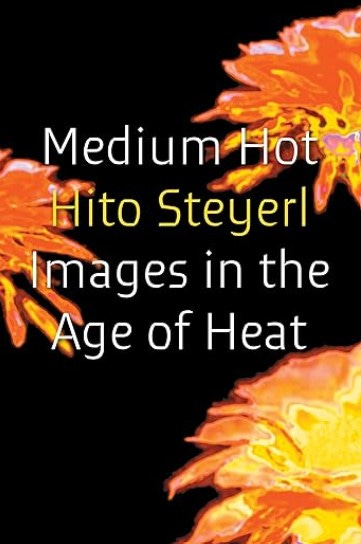
Medium Hot: Images in the Age of Heat, by Hito Steyerl. Brilliant, sophisticated, deeply unsettling; the best thing I have read yet on the intersections of art, politics, and artificial intelligence. Steyerl first came to my attention in 2007 with “In Defense of the Poor Image,” a cunning deconstruction of the dynamics of digital images that are widely and immediately shared — a postmodernist coda to Walter Benjamin’s famous essay. Medium Hot features the same kind of probing, associative thinking, an uncanny ability to synthesize abstract ideas and apply them with ruthless precision to the slippery flux of contemporary digital life. Reading this book is like watching a succession of airy tech-bro bromides about AI get shot down in flames, one after another — it truly rearranges your thinking. Brave and necessary.